What Does 925 Silver Mean? 92.5% Sterling Silver Explained
925 silver means 92.5% pure silver. The other 7.5% is usually copper, added because pure 999 silver is too soft to hold up in everyday jewellery. This 92.5% standard is called sterling silver. It is real silver. It tarnishes over time, but tarnish is surface discolouration that wipes off. The stamp alone is a maker's claim, so look for a BIS hallmark as well.
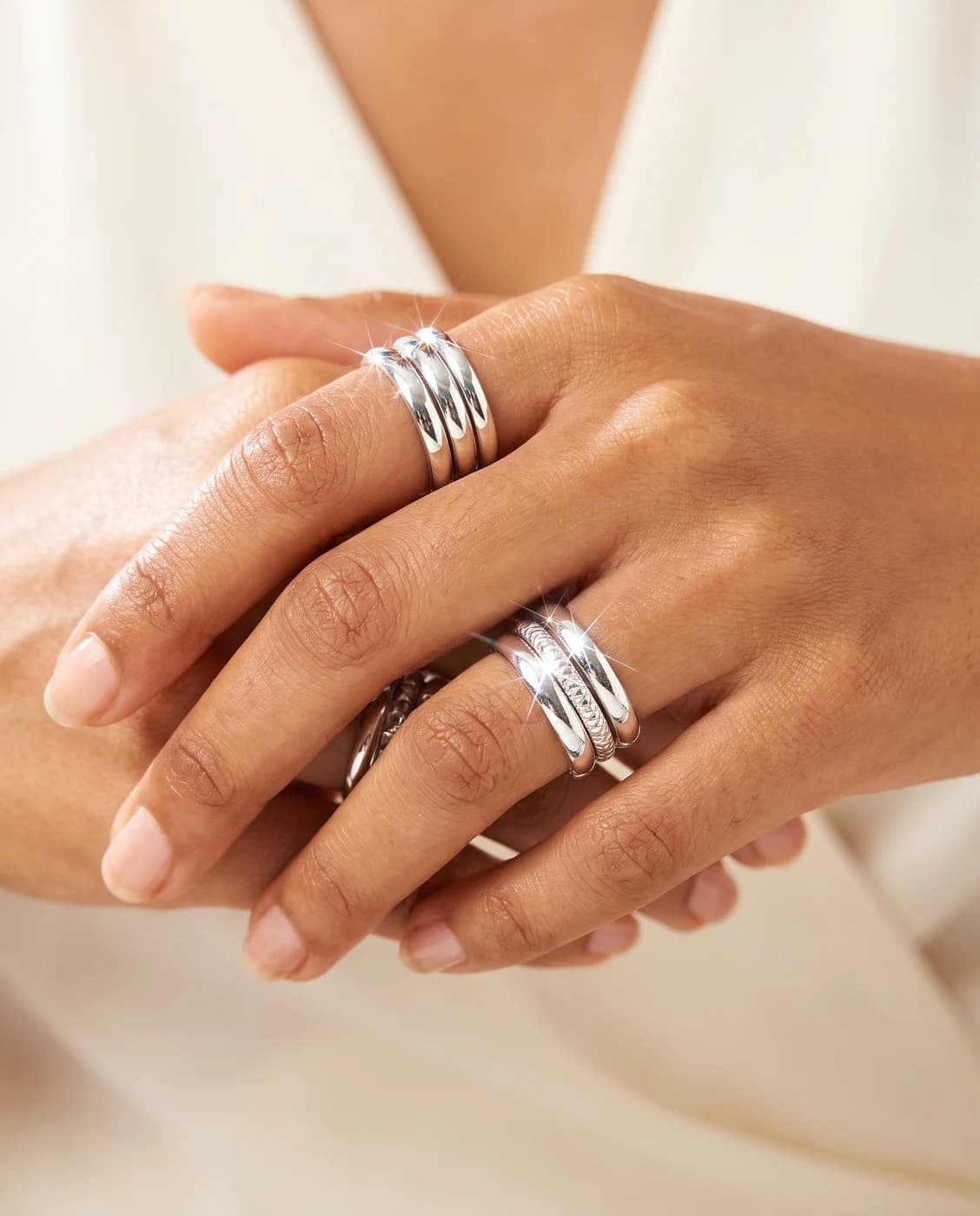
What 925 silver means
925 is a fineness mark. It means 925 parts out of every 1,000 are pure silver, which is 92.5% silver. The remaining 7.5% is other metal, usually copper. Jewellers call this alloy sterling silver, so 925 silver and sterling silver are the same thing.
When a product page says 925, it is describing the silver in the base metal. It does not describe the finish or the design. A 925 silver pendant can be oxidised, gold-plated or set with CZ (cubic zirconia), lab-created, and the 925 still refers to the silver beneath. This is why the mark matters more than the look when you compare two pieces.
| Mark | 925 or 92.5 |
| Pure silver | 92.5% |
| Other metal | 7.5%, usually copper |
| Common name | Sterling silver |
Why silver is mixed with copper
Pure silver, known as 999 fine silver, is very soft. A ring or bangle made from it bends and scratches with ordinary wear, so it is not practical for pieces worn every day. Adding a small share of copper gives the metal the strength to keep its shape. The silver content stays at 92.5%, which is why 925 is still counted as real silver.
999 fine silver is not wasted on jewellery. It is used for coins, bars and some ceremonial items, where purity matters more than durability.
999 fine silver vs 925 sterling silver
| 999 fine silver | 925 sterling silver | |
|---|---|---|
| Purity | 99.9% silver | 92.5% silver |
| Hardness | Very soft; bends and scratches easily | Harder; holds its shape in daily wear |
| Typical use | Coins, bars, some ceremonial items | Rings, chains, bangles, earrings |
| Tarnish | Tarnishes with air and sulphur | Tarnishes with air, sulphur and sweat |
Neither grade is better in the abstract. For jewellery, 925 is the usual choice because it balances purity with durability.
Does 925 silver tarnish?
Yes, and tarnish does not mean the silver is fake. Silver reacts with sulphur in the air, and with sweat, perfume and cosmetics, to form a thin dark layer on the surface. This is tarnish. It is surface discolouration, not damage to the metal, and a soft cloth usually wipes it off.
Rhodium plating slows tarnish on some pieces because it sits as a layer over the silver. It slows the process rather than stopping it, so dry storage and occasional cleaning still help.
What a 925 mark proves in India
In India, a BIS hallmark on silver shows the BIS logo, the fineness mark (925 or 92.5) and the jeweller's mark. Silver hallmarking is voluntary under the IS 2112 standard, so many silver pieces carry no hallmark at all.
A bare 925 stamp is the maker's own claim. A BIS hallmark is checked through the independent BIS hallmarking system. Silver has no HUID. The HUID, a six-character code, belongs to the mandatory gold hallmarking scheme, so a seller who promises a HUID on silver is describing gold rules.
Gold-plated 925 silver is still silver underneath. The gold-coloured layer sits over a 925 base, so the purity of the metal beneath is what the 925 mark describes.
Frequently asked
Last reviewed: 17 May 2026 · Verified by the anokhi expert panel
What does 925 silver mean?
925 silver means 925 parts out of 1,000 are pure silver, which is 92.5% silver. The other 7.5% is usually copper, added for strength. Jewellers call it sterling silver.
Is 925 silver real silver?
Yes. 925 silver is real silver, with 92.5% of its weight as pure silver. It is the standard alloy for silver jewellery because pure silver is too soft for everyday wear. A BIS hallmark confirms the purity, while the 925 stamp alone is the maker's claim.
Is 925 silver the same as pure silver?
No. Pure silver, called 999 fine silver, is 99.9% silver and is too soft for rings or chains worn daily. 925 sterling silver is 92.5% silver, with copper making up most of the rest. Both are silver, but 925 is the grade used for jewellery.
Why does 925 silver turn black?
925 silver tarnishes when it reacts with sulphur in the air, and with sweat and cosmetics. The dark layer is surface tarnish, not a sign that the silver is fake. A soft cloth usually wipes it off.
Does 925 silver have a HUID?
No. HUID is a six-character code used in India's mandatory gold hallmarking scheme. Silver hallmarking is voluntary under IS 2112, and silver jewellery does not carry a HUID. For silver, look for a BIS hallmark with the 925 mark.
Is a 925 stamp enough to prove silver is real?
Not on its own. A 925 stamp is the maker's claim, so it is not independent proof. A BIS hallmark, with the logo, fineness mark and jeweller's mark, is checked through the BIS system. Ask the seller for a certificate of purity as well.
Reviewed by the anokhi silver desk
Written and reviewed by anokhi's in-house silversmiths. Every piece we make is 925 sterling silver, BIS hallmarked and handcrafted in Jaipur. Last updated 11 October 2026.