Tribal & Oxidised Silver
Banjara-inspired oxidised 925 — jhumka, haar, kada, nath & bichiya
Tribal silver is the heavier, hand-worked, antique-finish tradition of Indian silver — Banjara and Rajasthani forms with ghungroo, coin drops, domed bosses and blackened recesses that throw the pattern into relief. anokhi makes it in certified 925 sterling silver rather than the German silver or brass usually sold as "tribal": oxidised jhumka and chandbali, statement haar, wide kada, nath and bichiya. The oxidation is a surface finish, not a different metal — every piece is real 925 and purity-marked.
How to choose tribal oxidised silver jewellery
What tribal oxidised silver is
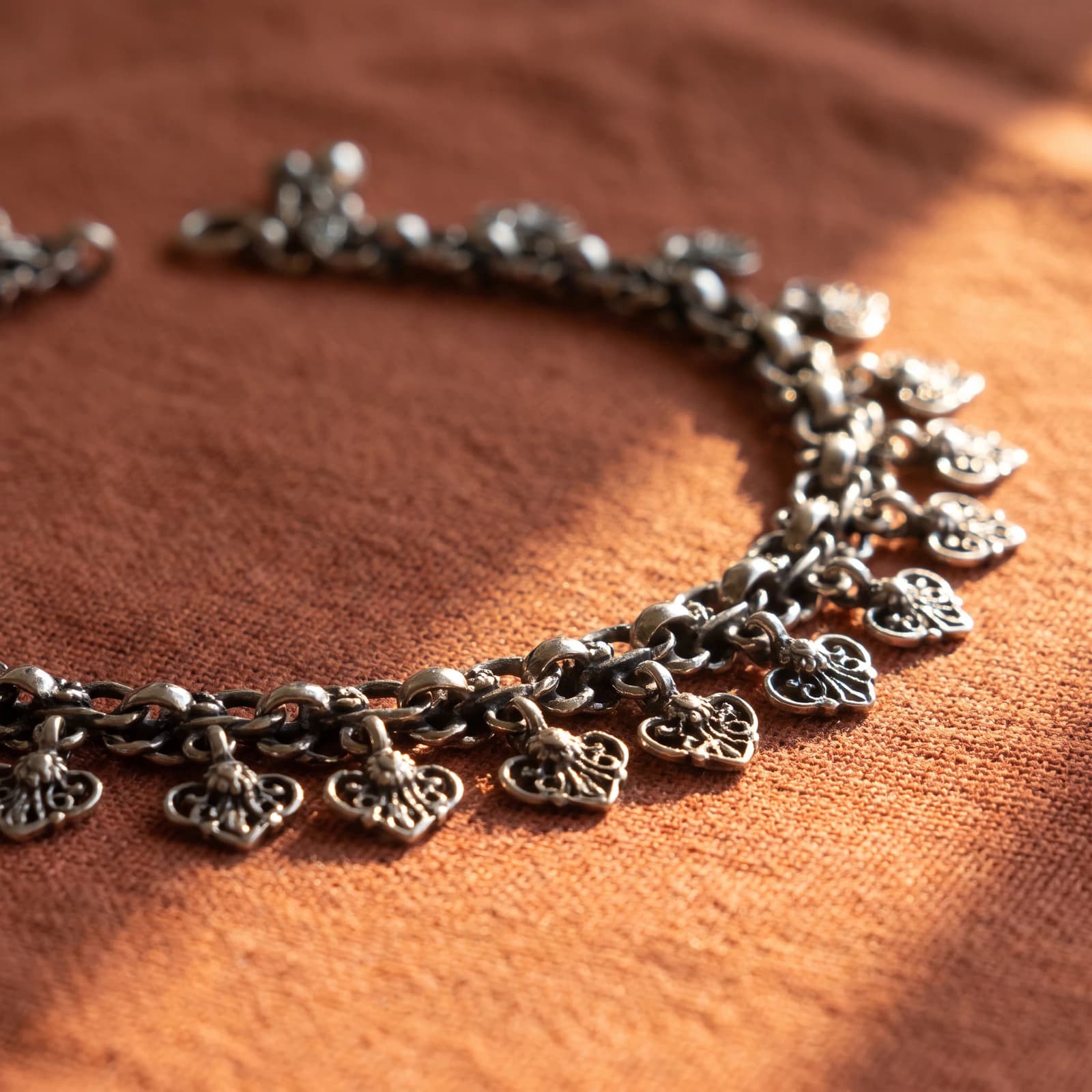
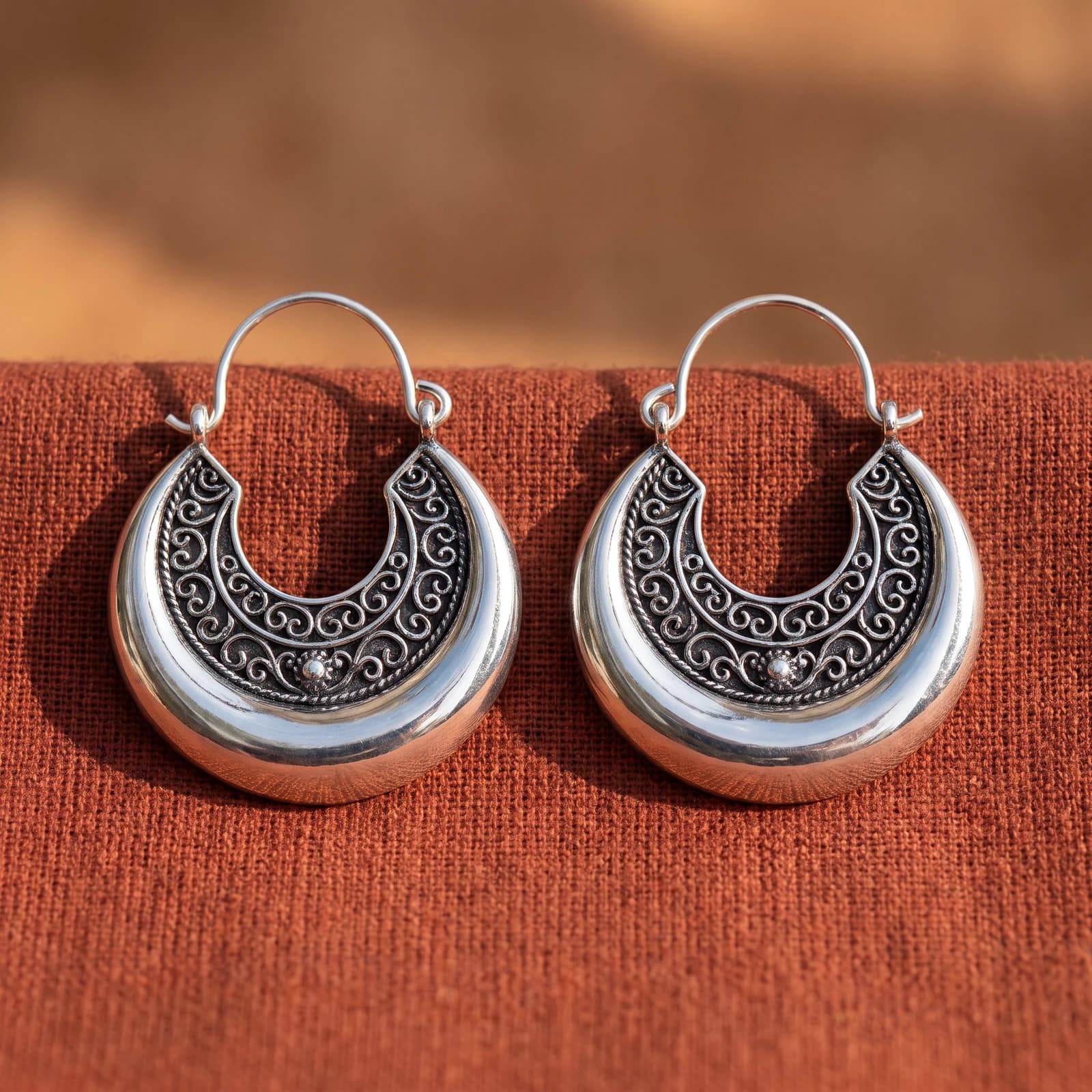
Tribal oxidised silver is 925 sterling silver with a darkened finish. The oxidised finish sits in the recesses of the design, so the raised work stands out in a lighter silver tone. It is a surface finish, not a different metal: the piece is still 925 silver underneath.
The word tribal describes the style, which draws on the dress and jewellery of Rajasthani, Banjara and other communities. It does not describe the alloy. Tribal jewellery sold at very low prices is often German silver, which is a mix of copper, nickel and zinc and contains no silver at all.
The designs in this category
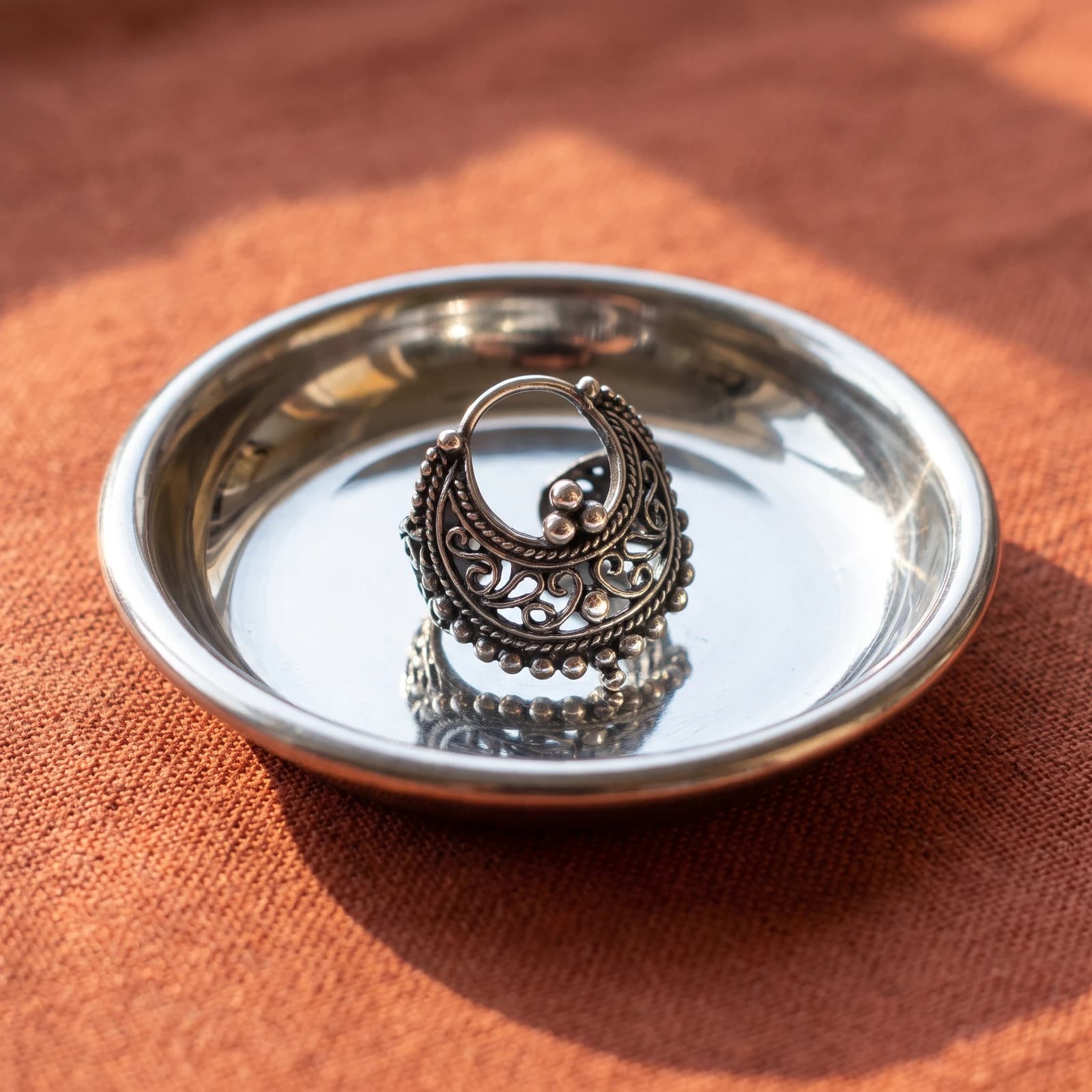
The oxidised silver nath is a traditional nose ring, worn large and ornamented for weddings and festivals. The anokhi version has fine beadwork and an optional chain to pin at the hair. It is made for a healed piercing, and the hoop is light enough that it does not drag on the nostril.
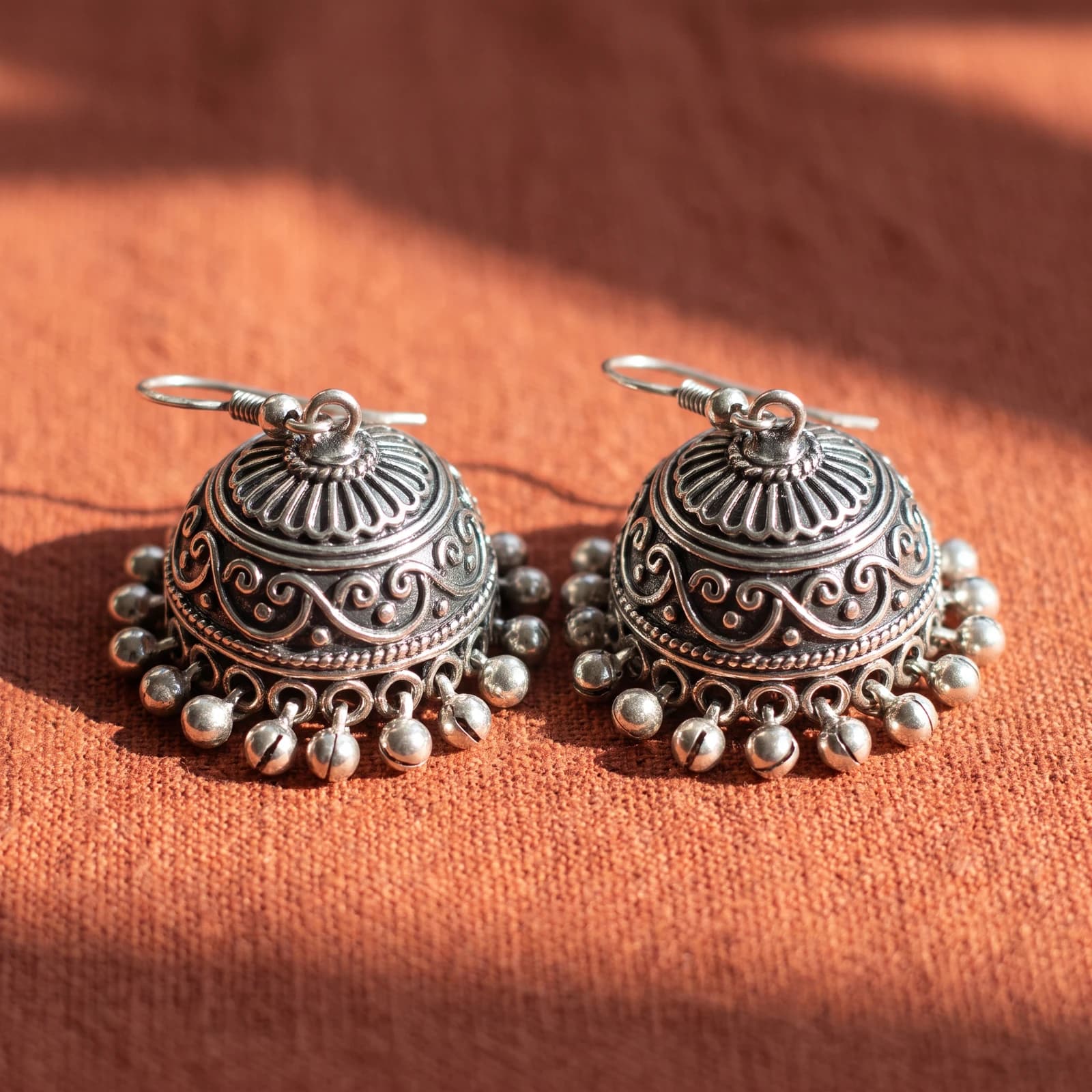
The tribal jhumka is a domed bell earring worked with ghungroo drops. The blackened recesses make the raised pattern read from a distance. It is sold as a pair.
The tribal chandbali is a crescent-moon earring with fine granulation across the crescent. It has a supporting hook for heavier festive wear and is sold as a pair.
The heavy antique silver anklets are a pair with ghungroo along the length. The oxidation sinks into the pattern while the raised work stays bright.
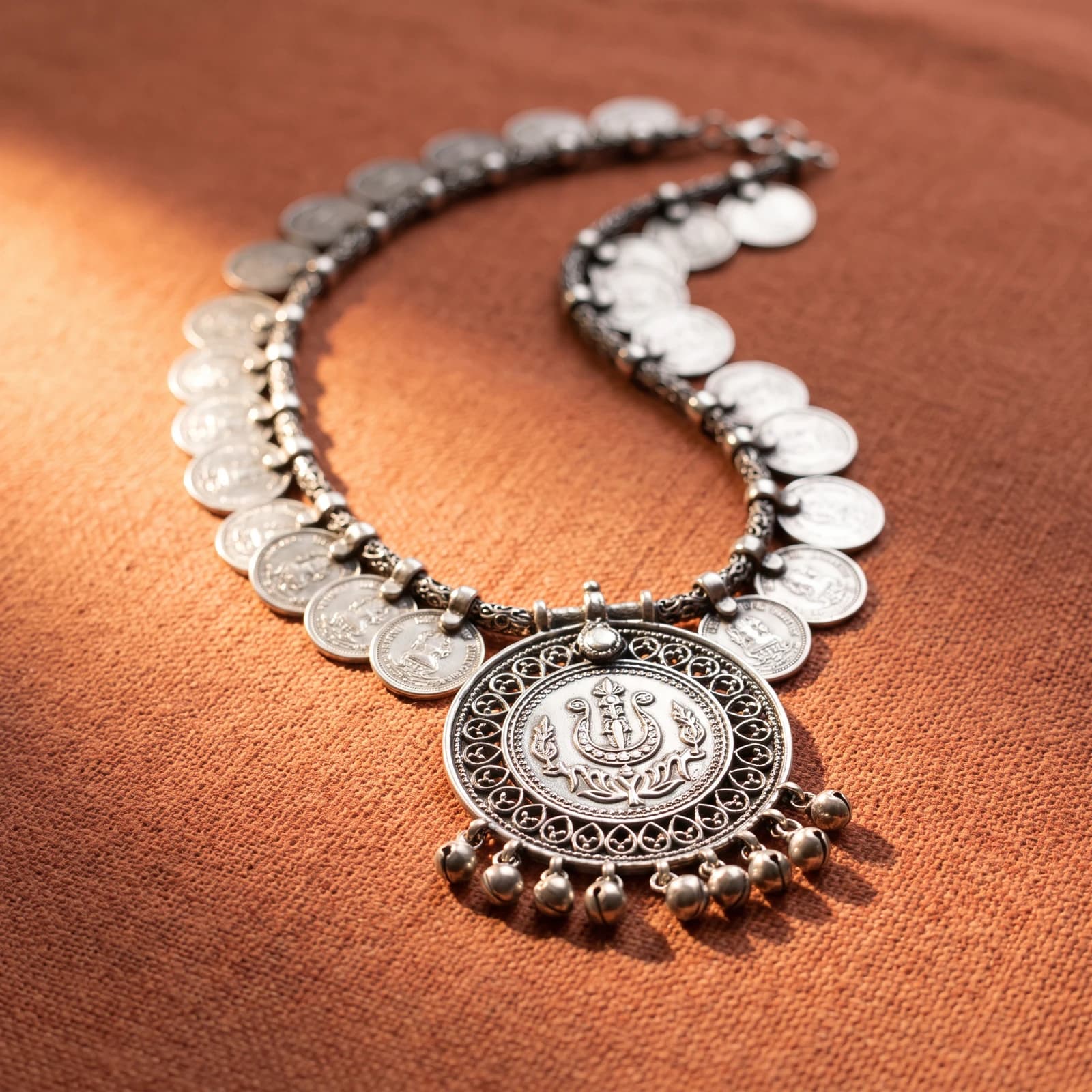
The Banjara haar is a coin-and-disc necklace with hand-set discs. It is sized to sit at the collarbone, so it is a layered piece rather than a full bridal set, and the length is adjustable.
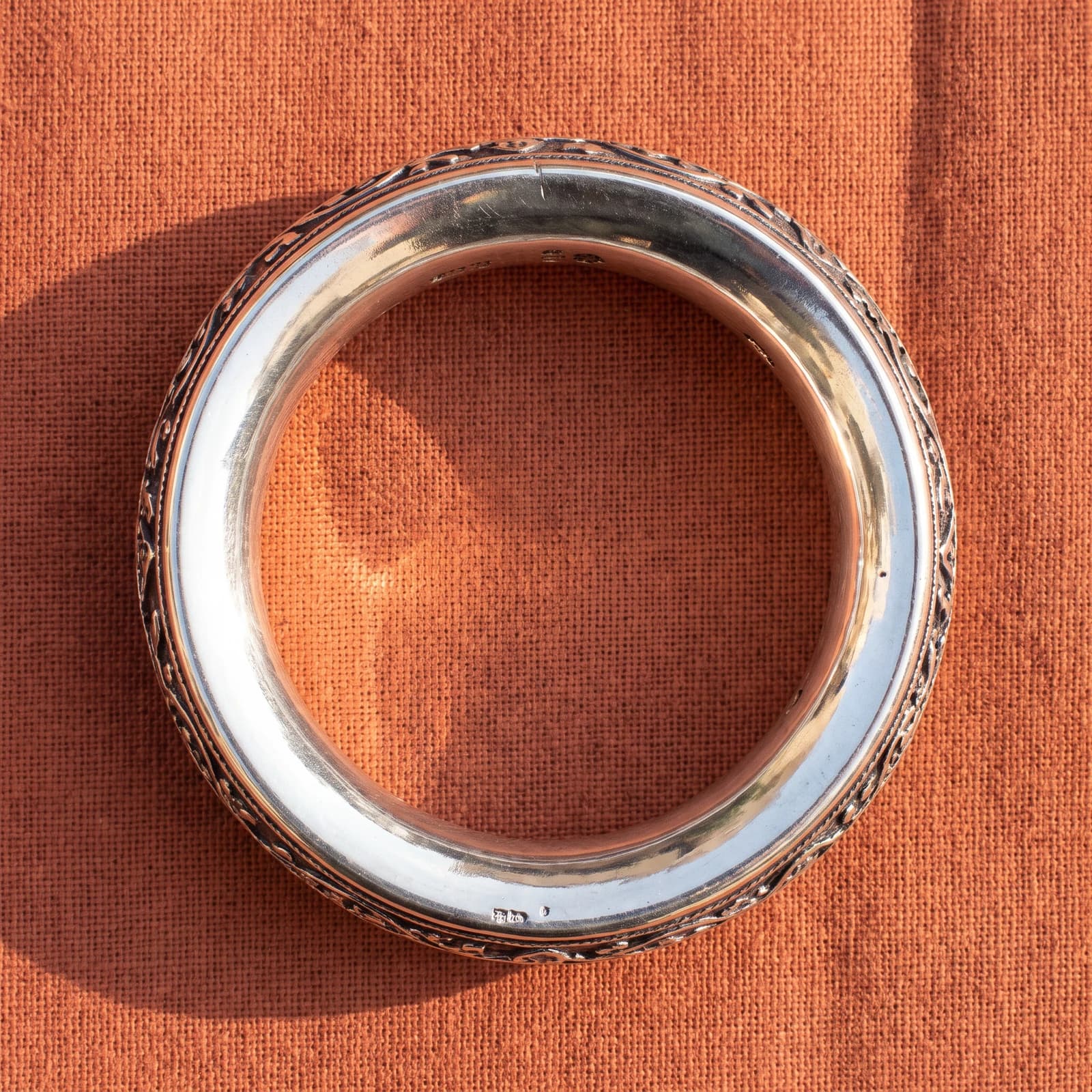
The tribal kada is a wide, rigid cuff of 18 to 22 mm, carved across its face. It is solid 925 silver with a small opening, so it slips over the wrist and holds its position.
Prices in this category
Prices run from ₹2,598 for the oxidised silver nath to ₹23,498 for the tribal kada. The tribal jhumka is ₹4,698 and the chandbali is ₹4,998. The heavy anklets and the Banjara haar are ₹14,098 each.
Check whether the listing is for a single piece or a pair before you order. The jhumka, chandbali and anklets are sold as pairs.
How to care for oxidised silver
Do not polish the recesses. Polishing removes the darkening that makes the pattern stand out. Wipe only the raised areas with a soft dry cloth to keep them bright, and leave the blackened detail alone.
Keep oxidised silver away from perfume, soap and water, and store it dry, in a box or pouch. For more on general care, see our guide to silver jewellery care and anti-tarnish.
Choosing a piece
For a single statement at a wedding or festival, choose the jhumka or the chandbali. For a layered look over ethnic wear, the Banjara haar sits at the collarbone. For the heaviest look, the anklets and the tribal kada are the pieces to choose.
Measure before you order. The nath is made for a healed piercing, and the kada should be checked against your wrist width before you buy.
About Tribal & Oxidised Silver
Is oxidised tribal jewellery real silver?
Ours is. Oxidation is a controlled surface treatment that darkens the recesses of genuine 925 sterling silver so the pattern reads. Most "tribal" jewellery sold in India is German silver or brass with no silver content at all — every anokhi tribal piece is real 925 and purity-marked.
What is the difference between tribal and German silver?
German silver (also sold as nickel silver) contains no silver — it is a copper-nickel-zinc alloy that mimics the look and costs a fraction. Tribal jewellery in real 925 sterling costs more because you are buying actual silver, and it holds resale value that German silver does not.
Will the antique finish wear off?
The blackened recesses are protected by the design itself, so they last; high-contact raised areas naturally brighten with wear, which is what gives antique silver its depth. Avoid harsh polishing, which strips the contrast — wipe gently and store dry.
Is oxidised silver heavy to wear?
Traditional tribal forms are heavier than minimal pieces because the metal volume is genuinely greater. We keep lighter versions of the popular forms for daily wear.