Bichiya (Silver Toe Ring): Meaning, Which Toe and How to Choose
A bichiya is a silver toe ring, usually worn as a pair, one on the second toe of each foot. It is a traditional ornament for married Hindu women in many North Indian communities, though customs vary by region and family. Silver is the usual metal, and open-backed designs make it easy to adjust the fit.
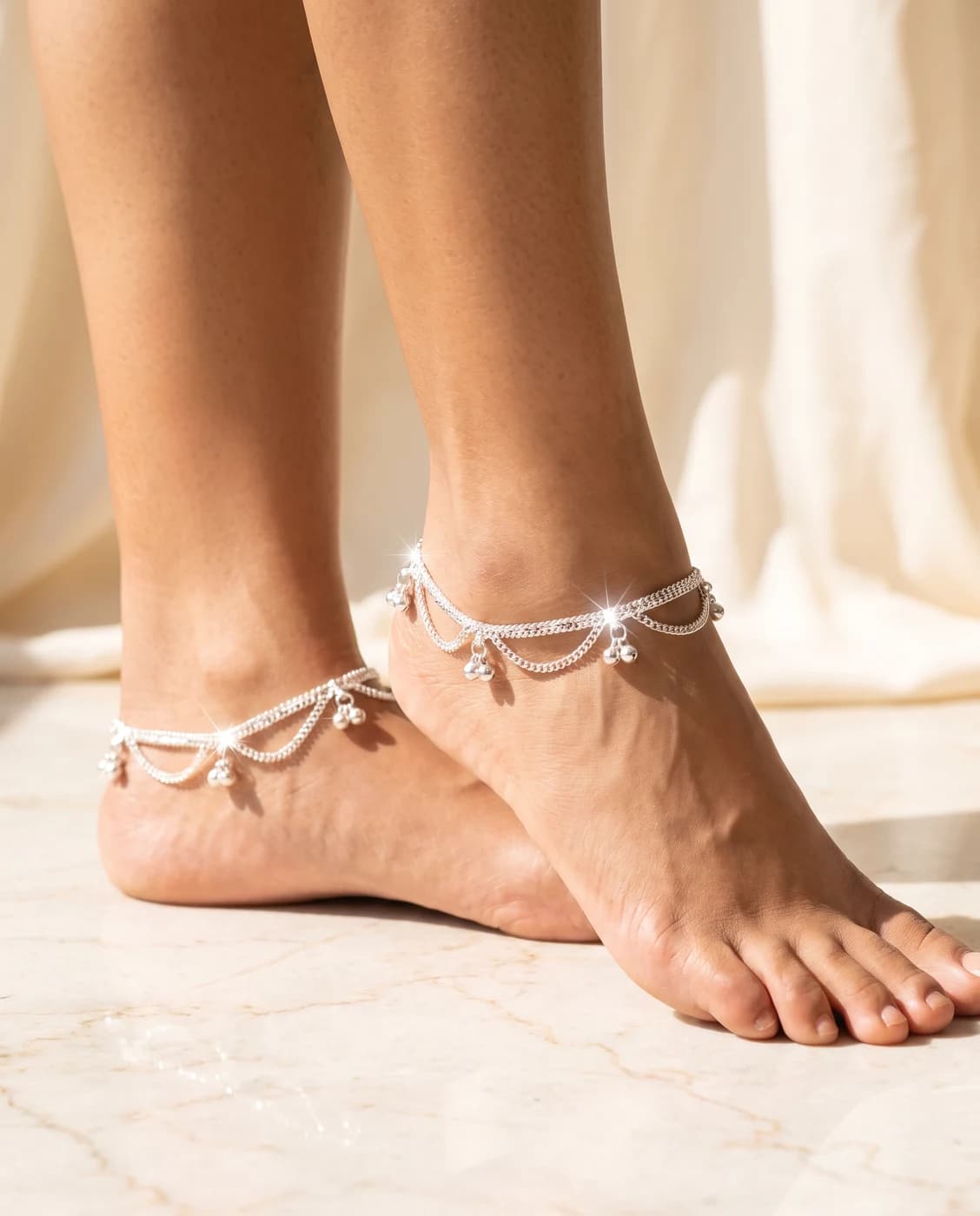
What a bichiya is
A bichiya is a silver toe ring. It is worn on the toe, usually as a pair, one on each foot. In many North Indian communities it is a traditional ornament for married Hindu women, often worn alongside the payal, the anklet. Customs differ by region, community and family, so it is best described as a tradition rather than a single rule.
The word is most often used for the pair. A bichiya set is two rings sold together so they match. Silver is the usual metal, and anokhi makes its bichiya in 925 sterling silver.
Which toe to wear a bichiya on
The traditional placement is the second toe, the one beside the big toe, with one ring on each foot. This is the most common answer to which toe a bichiya is worn on.
| Second toe | Traditional placement for women, one ring per foot |
| Big toe | Used for men's adjustable toe bands, not the traditional women's pair |
| Other toes | Customs vary, so follow what your family or community does |
Men also wear toe rings in some traditions. anokhi's 925 Silver Toe Ring for Men · Adjustable Big-Toe Band is designed to be worn on the big toe.
Why silver, not gold
Silver is the traditional metal for a bichiya. In many Hindu customs gold is not worn below the waist, so silver is chosen for the feet. This is a custom rather than a rule every family follows, and some families do wear gold anklets or toe rings.
Silver is also the everyday metal for feet ornaments in many households. It costs less than gold, which is why it is the common choice for a pair worn day to day.
Open or closed, and how to size a bichiya
Bichiya come in two broad styles. An open-backed ring has a gap at the back that lets it be adjusted to fit. A closed ring is a fixed loop in one size.
| Style | How it fits | Best for |
|---|---|---|
| Open-backed | Adjusts at the open back, gently closed or opened to fit | First-time wearers, unsure of size, or toes that change shape |
| Closed ring | Fixed size with no adjustment | Someone who already knows their exact toe size |
- 1Try it at the base
Slip the ring onto the toe where it will sit, at the base, not over the tip.
- 2Check the movement
It should sit snugly and turn slightly without falling off.
- 3Squeeze gently
Press the ring together gently. It should not pinch or leave a deep mark.
- 4Walk a few steps
If you feel pressure or the ring digs in, choose a larger size or an open-back style.
Wearing a bichiya with payal
A bichiya is traditionally worn with payal, the anklet, and many people wear the two together for a matching look. If you want both in one purchase, anokhi's 925 Silver Payal with Bichiya · Traditional Set of 4 is priced at ₹5,198.
If you already have payal, the 925 Silver Bichiya · Toe Ring Pair is priced at ₹1,598 and can be bought on its own.
Caring for a silver bichiya
Silver darkens slowly as it reacts with air and moisture. Keep bichiya dry, wipe them with a soft cloth after wearing, and store them apart from other jewellery so they do not scratch. Take them off before bathing, swimming, or applying lotion or perfume, as these can dull the finish. The silver care guide covers cleaning and anti-tarnish storage in more detail.
Frequently asked
Last reviewed: 17 May 2026 · Verified by the anokhi expert panel
What is a bichiya?
A bichiya is a silver toe ring, usually worn as a pair, one on the second toe of each foot. It is a traditional ornament for married Hindu women in many North Indian communities, and it is most often worn with payal. anokhi sells bichiya in 925 sterling silver.
Which toe do you wear a bichiya on?
The traditional placement is the second toe, the one beside the big toe, with one ring on each foot. Customs vary by community, so families may follow different practice. Men's toe rings are designed for the big toe, such as anokhi's adjustable big-toe band.
Why is silver used for bichiya instead of gold?
Silver is the traditional metal for bichiya because, in many Hindu customs, gold is not worn below the waist. This is a custom, and not every family follows it. Silver is also the common everyday metal for feet ornaments and costs less than gold.
Can men wear a silver toe ring?
Yes, toe rings are worn by men in some traditions. anokhi sells a 925 Silver Toe Ring for Men · Adjustable Big-Toe Band at ₹1,398, designed to be worn on the big toe. It should sit snugly without pinching, the same as a women's bichiya.
How do I choose the right bichiya size?
Choose an open-backed bichiya if you are unsure of your size, since it adjusts at the back. Slip the ring on at the base of the toe, check that it moves slightly without falling off, and squeeze it gently to make sure it does not pinch. If it digs in when you walk, go up a size or choose an open-back style.
Is a bichiya the same as a payal?
No. A bichiya is a toe ring worn on the toe, while a payal is an anklet worn on the ankle. They are often worn together as part of traditional jewellery. anokhi's 925 Silver Payal with Bichiya · Traditional Set of 4 is priced at ₹5,198.
How do I stop a silver bichiya from going dark?
Keep the rings dry, wipe them with a soft cloth after wearing, and store them apart from other jewellery. Remove them before bathing, swimming, or applying lotion and perfume. The silver care guide on anokhi covers cleaning and anti-tarnish storage in more detail.
Reviewed by the anokhi silver desk
Written and reviewed by anokhi's in-house silversmiths. Every piece we make is 925 sterling silver, BIS hallmarked and handcrafted in Jaipur. Last updated 11 October 2026.